Bernedoodle vs Sheepadoodle: Key Differences, Size, Temperament & Care (2026)

Bernedoodles and Sheepadoodles are two popular doodle breeds created by crossing a Poodle with another working dog breed. Both are intelligent, affectionate, and family-friendly dogs, which makes them appealing to many dog owners.
However, there are several differences between these two breeds, including their temperament, grooming needs, size range, and energy levels. Understanding these differences can help you decide which dog better fits your lifestyle.
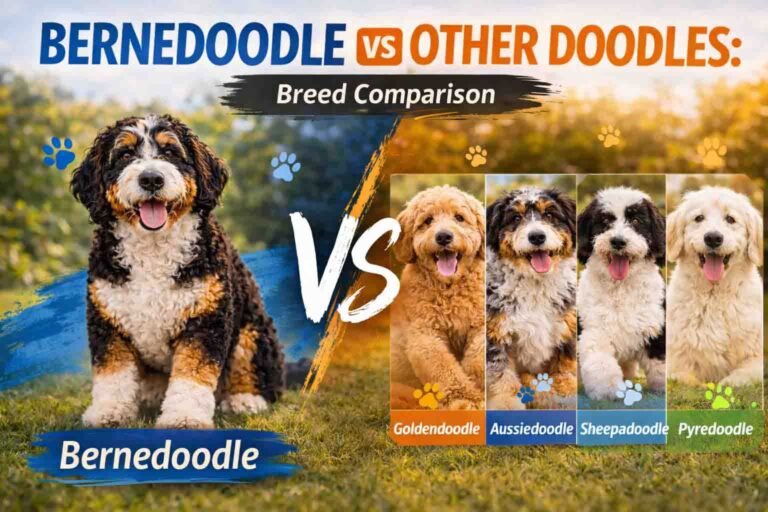
In this guide, we compare Bernedoodle vs Sheepadoodle in terms of size, personality, coat types, grooming, health, and overall suitability for families. If you’re comparing several doodle breeds, you can also read our complete Bernedoodle vs other doodles comparison guide where we compare multiple doodle mixes side by side.
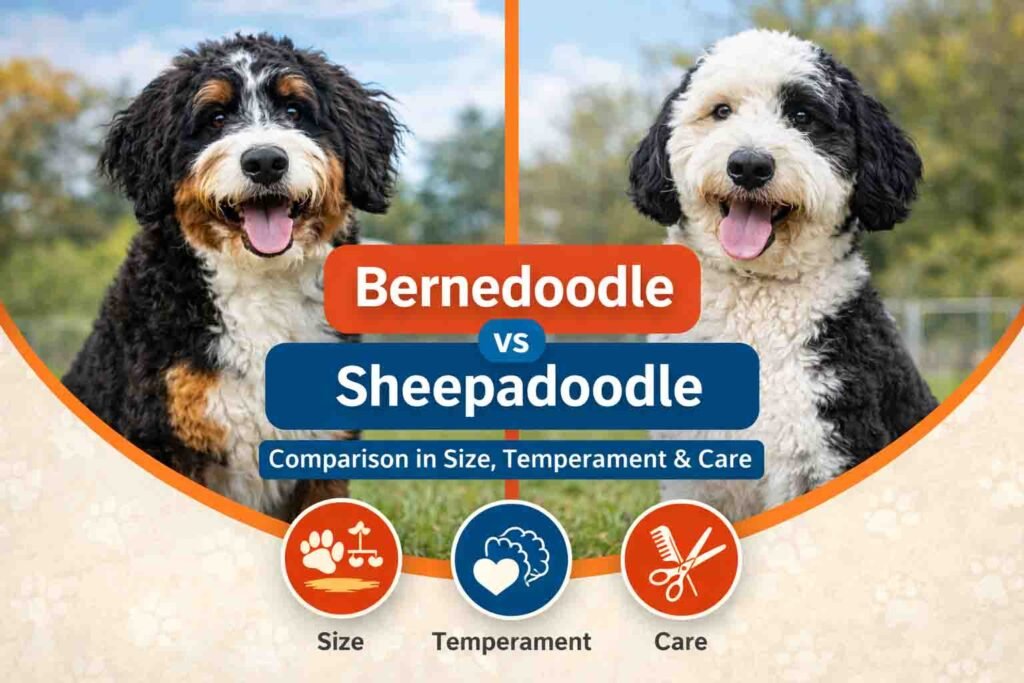
Bernedoodle vs Sheepadoodle: Quick Comparison
| Trait | Bernedoodle | Sheepadoodle |
|---|---|---|
| Parent Breeds | Bernese Mountain Dog × Poodle | Old English Sheepdog × Poodle |
| Temperament | Loyal, calm, affectionate | Energetic, playful, social |
| Size Range | 10 – 90 lbs | 45 – 85 lbs |
| Coat Types | Straight, wavy, curly | Wavy or curly |
| Shedding | Low to moderate | Low |
| Energy Level | Moderate | Moderate to high |
| Lifespan | 12 – 15 years | 12 – 15 years |
| Grooming Needs | Moderate to high | High |
Origin and Parent Breeds
Bernedoodle
The Bernedoodle is a hybrid dog created by crossing a Bernese Mountain Dog with a Poodle. This mix combines the calm, loyal temperament of the Bernese Mountain Dog with the intelligence and low-shedding coat of the Poodle.
Bernedoodles were first intentionally bred in the early 2000s and quickly became popular as family companion dogs.
Sheepadoodle
The Sheepadoodle is a cross between an Old English Sheepdog and a Poodle. This breed inherits the playful personality of the Old English Sheepdog along with the intelligence and trainability of the Poodle.
Sheepadoodles are known for their energetic personality and fluffy appearance, making them a popular doodle breed among active families.
Coat Types and Grooming
Both Bernedoodles and Sheepadoodles often inherit coats from their Poodle parent, which usually means low shedding but higher grooming needs.
Bernedoodle Coat
Bernedoodles can have three coat types:
- Straight coat
- Wavy coat
- Curly coat
Wavy coats are the most common. Curly coats usually shed the least and are often considered more allergy-friendly.
Sheepadoodle Coat
Sheepadoodles typically have:
- Wavy coats
- Curly coats
Their coats tend to be thick and fluffy, which means they require regular brushing to prevent matting.
Both breeds usually need professional grooming every 6–8 weeks.
Size Differences
Size is one of the biggest differences between the two breeds.
Bernedoodle Sizes
Bernedoodles come in several sizes depending on the Poodle used in breeding:
| Size | Weight |
|---|---|
| Tiny / Toy | 10 – 24 lbs |
| Mini | 25 – 50 lbs |
| Standard | 70 – 90 lbs |
This wide range makes Bernedoodles suitable for both apartments and larger homes.
Sheepadoodle Sizes
Sheepadoodles are generally larger because they are bred from larger parent dogs.
Typical Sheepadoodle weight:
45 – 85 pounds
Mini Sheepadoodles exist but are less common than standard sizes.
Temperament and Personality
Both breeds are friendly and intelligent, but their personalities differ slightly.
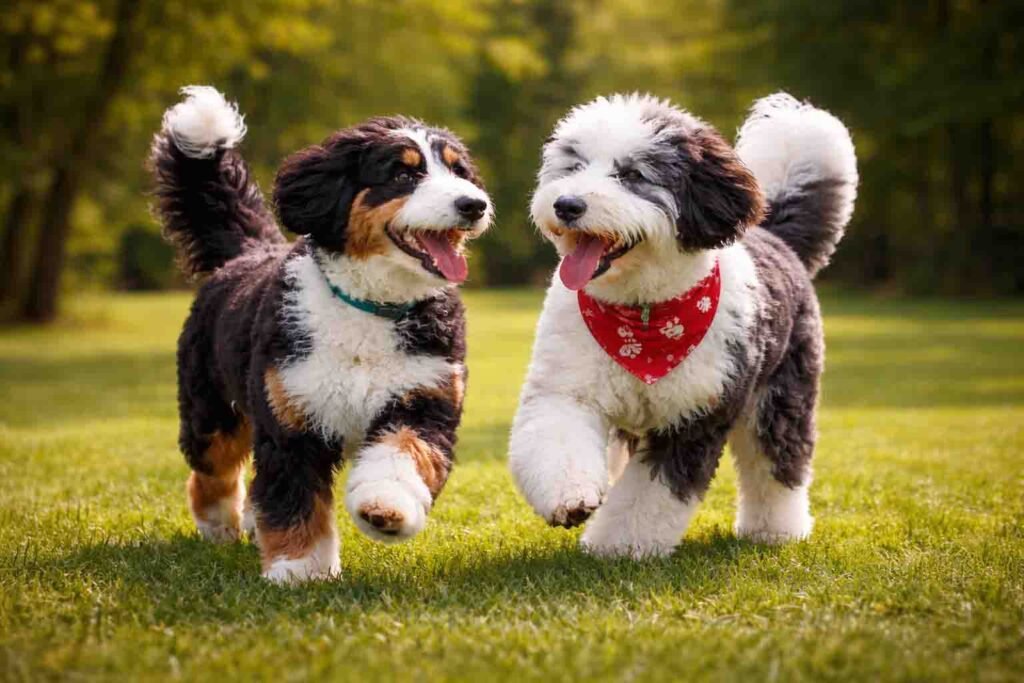
Bernedoodle Personality
Bernedoodles tend to be:
- Loyal and affectionate
- Calm and family-oriented
- Gentle with children
- Moderately active
Many Bernedoodles inherit the relaxed temperament of the Bernese Mountain Dog.
Sheepadoodle Personality
Sheepadoodles are typically:
- Highly energetic
- Playful and social
- Intelligent and curious
- More active than Bernedoodles
Because of their energy level, Sheepadoodles often require more mental stimulation and exercise.
Exercise Needs
Both breeds benefit from daily exercise.
Bernedoodle
Most Bernedoodles need:
30–60 minutes of daily activity
They enjoy walks, playtime, and moderate outdoor activities.
Sheepadoodle
Sheepadoodles are generally more energetic and may need:
60+ minutes of daily exercise
They often enjoy activities such as:
- hiking
- agility training
- fetch
- running
Active families may find Sheepadoodles to be a better fit.
Health and Lifespan
Both breeds can inherit health conditions from their parent breeds.
Bernedoodle Common Health Issues
- Hip dysplasia
- Elbow dysplasia
- Eye conditions
- Skin sensitivities
Sheepadoodle Common Health Issues
- Hip dysplasia
- Bloat
- Eye conditions
- Skin allergies
Responsible breeders perform genetic health testing to reduce the risk of inherited conditions.
Average Lifespan
Both breeds typically live:
12 – 15 years
Smaller dogs often live slightly longer.
Cost Comparison
The price of these doodle breeds varies depending on breeder reputation, size, and location.
| Breed | Average Price |
|---|---|
| Sheepadoodle | $1,000 – $3,000 |
| Bernedoodle | $2,000 – $5,000 |
Bernedoodles are usually more expensive due to high demand and popularity.
Which Breed Is Better for Families?
Both breeds make excellent family companions.
Choose a Bernedoodle if you want:
- A calmer dog
- A wider range of size options
- A slightly easier-going temperament
Choose a Sheepadoodle if you want:
- A very active dog
- A playful and energetic personality
- A dog that enjoys outdoor activities
Conclusion
Bernedoodles and Sheepadoodles share many qualities thanks to their Poodle heritage. Both breeds are intelligent, affectionate, and suitable for families.
However, Sheepadoodles tend to be more energetic and playful, while Bernedoodles are often calmer and more relaxed.
The right choice ultimately depends on your lifestyle, activity level, and the type of dog personality you prefer.